
Your House Flooded in Weslaco: A Step by Step Checklist for 2027
 Wally JoeCash home buyer in Weslaco
If your house flooded, stay out until the power is off and the structure looks safe. Then photograph everything, call your flood insurer and start drying the house within 24 to 48 hours to limit mold. If you have an NFIP flood policy, you generally have 60 days from the flood to send a signed proof of loss, unless FEMA extends it. If the President declares a disaster, apply for FEMA and SBA help, and if the governor declares one, you have 105 days to ask the Hidalgo County Appraisal District for a temporary property tax exemption. Before repairs, check with the City of Weslaco about permits, because a home in a high risk zone that's 50% or more damaged may have to be raised or brought up to current rules.
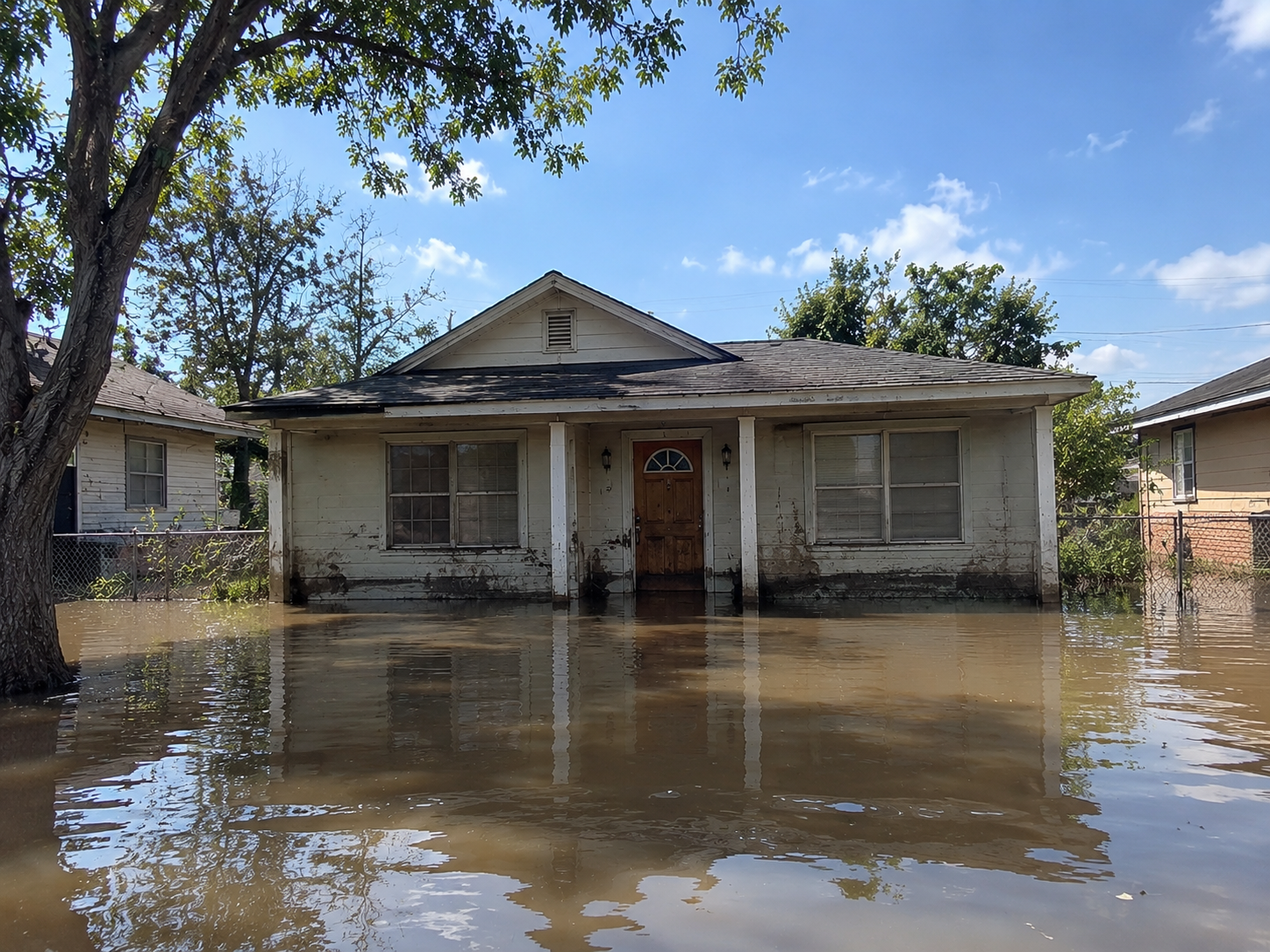
Walking into a flooded house is one of the hardest things a homeowner goes through. The smell, the mud line on the wall, the furniture you can't save. If you're reading this with wet floors under your feet, take a breath. You don't have to do everything today.
This checklist puts the steps in order, from the first hour to the first few months, with the deadlines that matter most in Texas and the local offices to call in Weslaco and Hidalgo County. Keep it open on your phone and work through it one step at a time.
Your Flood Recovery Timeline at a Glance
| When | What to do | Why it matters |
|---|---|---|
| First hours | Stay safe, shut off power if safe, take photos | Prevents injury and documents the loss |
| Day 1 | Report the flood to your insurer | Starts your claim |
| Days 1 to 2 | Remove water and wet items, start drying | Mold can grow if things stay wet past 24 to 48 hours |
| First week | Meet the adjuster, keep receipts, list damaged items | Supports your claim amount |
| Within 60 days | Send your NFIP proof of loss (unless FEMA extends it) | Missing it can cost you payment |
| If a federal disaster is declared | Apply for FEMA and SBA help | Covers needs insurance doesn't |
| Within 105 days of a governor's declaration | Apply for the temporary disaster tax exemption | Can lower this year's property taxes |
| Before repairs | Get permits and ask about substantial damage | Avoids rebuilding twice |
Step 1: The First Hours After the Flood
Don't go into a flooded home until the electricity is off and the building looks structurally sound. Never touch electrical equipment if it's wet or if you're standing in water. If it's safe, turn the power off at the breaker. If it isn't, call your electric company and let them shut it off.
Floodwater can carry sewage and chemicals. Wear rubber boots, gloves, long sleeves, goggles and an N95 mask when you go in. Keep children out of the cleanup.
Take wide shots of each room, close ups of damage and a photo of the water line on the walls. Do the same outside, including the garage and any sheds. These photos are the backbone of your insurance claim and any FEMA application.
Cover broken windows or roof openings, and move what you can save to a dry place. Keep receipts for tarps, fans and supplies.
Step 2: Report Your Insurance Claim Right Away
Know what your policy covers. Standard homeowners policies usually exclude flood damage. Flood is its own policy, bought from the federal flood program (the NFIP) or from a private flood carrier. If rain came in through a damaged roof, your homeowners policy may cover that part, so call both insurers if you have both.
Report the loss to your flood insurer or agent as soon as you can. An adjuster should contact you within a few days to inspect the home and record the water level.
Don't throw everything away before the adjuster sees it. When you must remove wet items for health reasons, photograph them first and keep a small sample of carpet, flooring and drywall if you can.
Watch the 60 day deadline. The NFIP requires a signed proof of loss within 60 days of the flood, unless FEMA authorizes an extension after a severe event. File it even if you don't agree with the adjuster's estimate. You can send an updated proof of loss later if you find more damage. If your NFIP claim is denied, you can appeal to FEMA within 60 days of the written denial.
Expect your lender on the check. If you have a mortgage, the claim check may list your mortgage company too. Call your servicer early to learn how they release repair money.
Step 3: Dry the House and Prevent Mold
The CDC and EPA both say to dry your home and everything in it as quickly as you can, ideally within 24 to 48 hours. If you couldn't dry the house in that time, assume mold has started to grow.
What to do:
- Pump or wet vacuum standing water.
- Open doors and windows while you work. Once the power is safe, run fans and dehumidifiers.
- Pull out wet carpet and padding. They usually can't be saved.
- Cut out wet drywall and insulation above the water line so the wall cavities can dry.
- Throw away anything soaked by floodwater that can't be fully cleaned and dried within 24 to 48 hours, after photographing it for your claim.
- Clean hard surfaces and let them dry completely before painting or sealing. Painting over mold doesn't stop it.
Weslaco tip: In the Valley's heat and humidity, mold moves fast. If the house is large or the water was deep, a water mitigation company with commercial dryers may save more of the structure than fans alone.
Step 4: Apply for FEMA and SBA Help if a Disaster Is Declared
FEMA's Individual Assistance only opens after a Presidential disaster declaration for your county. When that happens, NFIP policyholders are encouraged to apply for FEMA disaster assistance in addition to their flood claim. You can apply at disasterassistance.gov.
After the March 2025 storms, the federal declaration covered Hidalgo County, and FEMA opened a recovery center in Weslaco at the Weslaco EDC, 275 S. Kansas Ave. If another disaster is declared, check FEMA's website for the nearest center.
SBA disaster loans are low interest loans for homeowners and renters, not just businesses. Homeowners may borrow up to $500,000 to repair or replace a primary home, and homeowners and renters may borrow up to $100,000 for personal property such as furniture, clothing and cars. You don't have to wait for your insurance settlement to apply. SBA can lend for the full loss if you agree to use insurance money to pay down the loan.
Step 5: Ask About Property Tax Relief in Hidalgo County
Texas offers a temporary property tax exemption for homes damaged in a governor declared disaster area. Under Tax Code §11.35, a qualifying property must be at least 15% damaged, and the owner must apply no later than 105 days after the governor's declaration. Apply through the Hidalgo County Appraisal District (HCAD).
The chief appraiser assigns a damage level, and that sets the share of value exempted:
| Level | Damage | Description | Share of value exempted |
|---|---|---|---|
| I | 15% to under 30% | Minimal damage, can still be used | 15% |
| II | 30% to under 60% | Nonstructural damage, waterline under 18 inches above the floor | 30% |
| III | 60% to under 100% | Significant structural damage, waterline 18 inches or more | 60% |
| IV | 100% | Total loss, repair isn't feasible | 100% |
The exemption is prorated for the rest of the tax year after the disaster. It's a temporary break, not a permanent change.
If there's no governor's declaration, you may still be able to lower your value through a protest the next year if the damage is still there on January 1. Read how to protest your value in Hidalgo County, and double check that your homestead exemption in Hidalgo County is still on file.
Step 6: Before You Rebuild, Check Permits and the 50% Rule
Repairs to a flood damaged home usually need permits, and electrical and plumbing work almost always does. After past floods, several Valley cities waived permit fees for flood repairs, so ask whether a waiver is in place. If your home is outside city limits, ask Hidalgo County instead.
If your home is in a FEMA high risk flood zone and the cost to repair it equals 50% or more of its market value before the flood, local officials can determine it's "substantially damaged." That decision is made locally, not by FEMA. A substantially damaged home has to be brought into compliance with current floodplain rules. That can mean raising it, moving it or tearing it down.
If you have an NFIP policy and your home is substantially damaged by flood in a high risk zone, ICC coverage can pay up to $30,000 toward raising, moving or demolishing it. Ask your adjuster or agent about it early.
Look up your address on FEMA's map at msc.fema.gov.
Step 7: Hire Help Without Getting Scammed
Contractor scams spike after every flood. The Texas Department of Insurance and the Texas Attorney General offer clear warnings:
- Get written bids and use local companies when you can.
- Don't pay the whole bill up front. After a disaster, it's against the law for out of town contractors to ask for payment before they start work.
- Say no to anyone who offers to "cover" your deductible. It's illegal for a contractor to waive your deductible or hide it in the bid.
- Don't sign your insurance check over to a contractor.
- Know your three day right to cancel a door to door sale, which the seller must tell you about in writing.
- Check licenses. Plumbers are licensed by the Texas State Board of Plumbing Examiners, and electricians through the Texas Department of Licensing and Regulation.
- Report scams to the Texas Attorney General at 800 621 0508. The TDI Help Line is 800 252 3439.
Step 8: Handle Debris and Keep the House Secure
After big floods, the city or county usually runs special curbside pickups for flood debris. After the June 2018 flood, crews collected flood related debris such as appliances, construction debris and household items from the curb, but only debris caused by flood damage. Watch for city announcements on what can go out and when.
If you have to leave the house empty while it dries or while you decide what to do, keep the yard mowed and the doors locked. An empty, overgrown lot or an unsecured door is the kind of thing that brings a code enforcement letter. Our guide to what to do after a Weslaco code violation notice explains how those notices work.
Documents to Keep in One Folder
- Photos and videos of every room, before and after cleanup
- Your flood and homeowners policy numbers and agent contact
- Claim number, adjuster name and phone
- Signed proof of loss and the date you sent it
- Receipts for supplies, hotel stays and repairs
- A list of damaged items with approximate age and value
- FEMA registration number and any letters
- SBA application and letters
- HCAD account number and any exemption application
- Contractor bids, contracts and permits
If You'd Rather Not Rebuild
Some owners repair and stay. Some repair and sell. And some decide the house, the timeline or the repair bill isn't worth it anymore. All three are reasonable.
| Compare | Repair and stay | Repair and list | Sell as is |
|---|---|---|---|
| Upfront cost | High, offset by insurance or loans | High | None |
| Time | Months | Months, then time on the market | Shorter |
| Best when | Insurance covers most of the work and you want to stay | The home will be in good shape and you can wait | Damage is heavy, money is tight or you've decided to move on |
| Watch out for | The 50% rule and permit delays | Disclosure and inspection questions | A lower price than a repaired home would bring |
If you sell, Texas law generally makes you list past flooding on the state disclosure form, repaired or not. Honest disclosure protects you.
A repaired home with good records often sells for more on the open market. If you'd rather skip the rebuild, selling for cash removes that work from your list. For the numbers side by side, read cash offer vs listing in Weslaco.
Wally buys flooded houses in whatever state the water left them, with no repairs or cleanout on your end. Here's how we handle flood damaged homes in Weslaco. You can also read about selling a house that needs repairs, a house as is or a flooded mobile home. With clean title, a cash closing may land in as little as 7 to 14 days, depending on title.
Our home page shows how we buy houses fast in Weslaco, and we work with flooded homes on any street in ZIP 78596 or ZIP 78599.
Ask any cash buyer, including Wally, whether they'll buy the home themselves or might assign the contract. Texas law requires them to tell you in writing. See how Texas real estate wholesaling works.
Mistakes to Avoid After a Flood
- Going in before the power is off. Water and electricity don't mix.
- Cleaning before you take photos. You can't recreate the damage later.
- Missing the proof of loss deadline. It's 60 days for NFIP policies unless FEMA extends it.
- Waiting too long to dry the house. Mold can start within 24 to 48 hours.
- Skipping the tax exemption window. The 105 days after a governor's declaration go by fast.
- Starting repairs without permits. It can cause problems with inspections, insurance and a future sale.
- Paying a contractor in full up front. Pay as work is completed.
Frequently Asked Questions
What should I do first if my house flooded?
Stay safe first. Don't go in until the electricity is off and the structure looks sound, then photograph all the damage and call your insurance company to start a claim. Begin drying the house as soon as it's safe.
Does homeowners insurance cover flood damage in Texas?
Usually, no. Standard homeowners policies typically exclude flooding, so flood coverage has to come from its own policy, federal or private. Damage from rain coming through a storm damaged roof may be covered by your homeowners policy.
How long do I have to file a flood insurance claim?
Report it right away. For NFIP policies, you generally must send a signed proof of loss within 60 days of the flood, unless FEMA extends the deadline after a major disaster.
Can I get FEMA help if I don't have flood insurance?
Sometimes. FEMA Individual Assistance is available only after a Presidential disaster declaration for your county, and it may help with needs insurance doesn't cover. SBA disaster loans may also be available.
How fast does mold grow after a flood?
Fast. The CDC and EPA advise drying your home within 24 to 48 hours, and if you can't, you should assume mold is growing. Throw out soaked items that can't be cleaned and dried in that time.
Can I lower my property taxes after a flood in Hidalgo County?
Yes, if the governor declared a disaster and your home is at least 15% damaged. You must apply with the Hidalgo County Appraisal District within 105 days of the declaration for a temporary exemption.
What is the 50% rule after a flood?
It's FEMA's substantial damage rule. If a home in a high risk flood zone costs 50% or more of its pre flood market value to repair, local officials can require it to be brought up to current floodplain rules, which may mean raising the house.
Can I sell my house after it flooded?
Yes. Owners fix and list, or they sell the house in its flooded state for cash. Both routes generally require telling the buyer about the flood in writing.
Not Sure Whether to Rebuild or Sell?
You don't have to decide today. When you're ready, tell us about the house and the damage. Wally will give you a cash number for the house as it sits, with no obligation, so you can compare it with your repair estimate and your insurance payout.